Introduction
In our connected, data-driven world, automation has evolved beyond just substituting repetitive manual jobs. With advances in networks, software integration, and AI, we are at the point where automation contains L1, L2, and L3 levels, and it can interact with smart products without a hitch.
This guide will explain the different levels of automation, their industrial significance, what smart products are, and what role AI plays (and how it differs) related to automation.
The Levels of Automation: L1, L2, and L3
Level 1 (L1) Automation – Device Level
Definition: L1 is the lowest level of automation, where control is exercised on the device or machine directly.
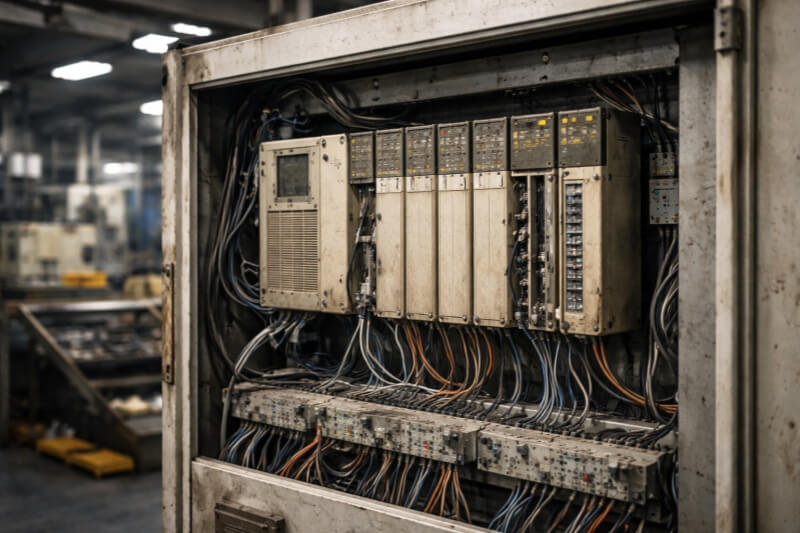
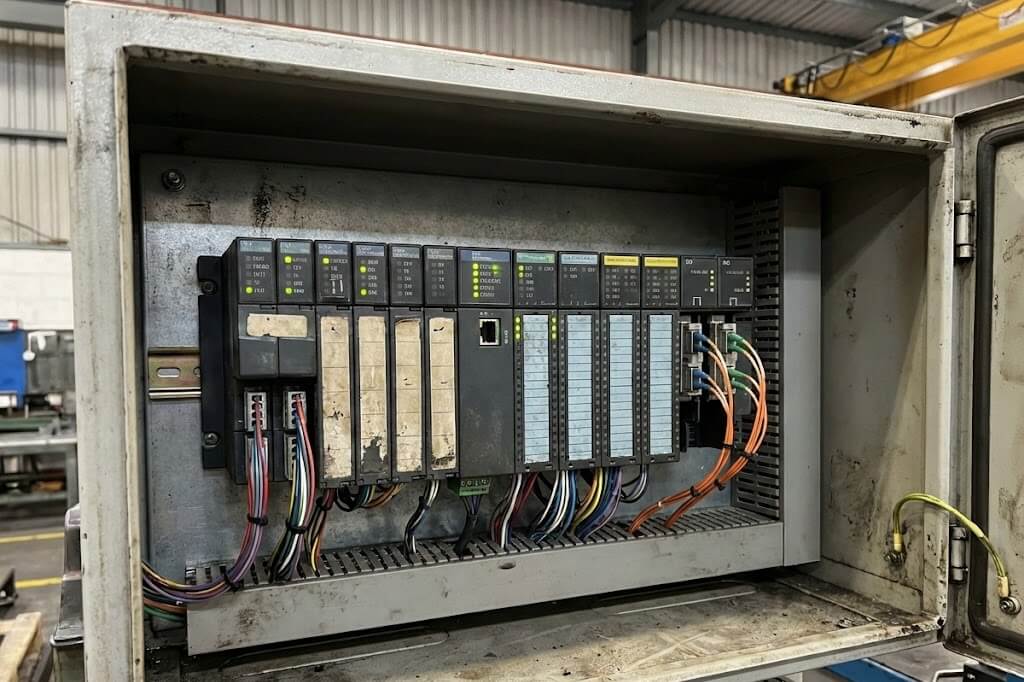
Components: PLCs (programmable logic controllers), Sensors, Actuators.
Example: A temperature controller on a furnace that turns on/off the heating elements based on a set point.
Industry Role: Provides real-time process control, reliability, and independent control at a local level without relying on other systems to control it.
Level 2 (L2) Automation – Process Coordination Level
Definition: L2 automation monitors and coordinates multiple L1 devices across a process line or process area.
Components: SCADA (Supervisory Control and Data Acquisition) systems, Manufacturing Execution Systems (MES)
Example: A SCADA system in a bottling plant that could monitor filling, capping and labeling all happening at the same time and could change the speed of the machinery in real time.
Industry Role: Optimization of workflows, identification of bottlenecks, utilize real-time production data.
Level 3 (L3) Automation - Plant Management Level
Definition: Level 3 automation refers to the coordination of production schedule, resources, and quality across the plant.
Connectors: Enterprise Resource Planning (ERP) systems, production planning and quality management systems.
Example: ERP system could reorder raw materials when levels are at minimum levels and could change production schedules based on sales forecasts.
Industry Role: Operates the connection between shop floor actions, with production information up to the minute, and business decisions, for a fully integrated operation.
How L1, L2 and L3 work together
So, in an integrated automation pyramid there are L1 devices creating real time data; L2 monitoring and synchronizing processes; L3 is executing overall business decisions. This discipline can provide assurance of consistency, efficiency and scalability.
Smart products and automation
What is a Smart Product?
Smart products are a collection of separate devices, each providing or containing non-intrusive sensors, connectivity, and processing, that lets the smart product communicate and interact, react and adapt to change, and sometimes self-manage.
Examples:
Smart thermostats that automate heating/cooling according to your routine.
Industrial machines that generate predictive maintenance notifications.
The Function of Automation in Smart Products
Data Capture: Sensors capture operational and environmental data.
Real-Time Decision Making: Microcontrollers or cloud-based platforms trigger automated functions.
Feed-Back Loop: Automation helps the product learn from your behaviors with it.
A smart factory conveyor belt with load sensors can reduce speed automatically based on weight distribution, help prevent jams, and ensure uniform processing.
AI vs. Automation - What is the difference?
What is Automation?
Automation adheres to a predetermined set of rules or logic. When a process has been programmed, it simply follows the same process without change until it has been reprogrammed.
Example: A robotic welding arm that always welds the same point on a car chassis.
What is Artificial Intelligence (AI)?
Artificial Intelligence (AI) uses algorithms that can learn from the data, change, and make predictions or categorizations without being programmed for each and every specific circumstance.
Example: A quality control system that uses machine vision to recognize defects that the system has not “seen” before, based on the training data.
Key Differences
| Feature | Automation | AI |
|---|---|---|
| Decision Basis | Pre-set rules | Data-driven learning |
| Flexibility | Limited | High |
| Predictive Capability | No | Yes |
| Example | Conveyor motor control | Predicting machine failure |
Industry Applications of AI and Automation
Predictive Maintenance - AI detects failure; automation generates a work order.
Energy Optimization - AI looks at your energy consumption; automation adjusts machine cycles.
Quality Control - AI identifies unknowns; automation removes the defect.
The Future - Level 4 and Beyond
Level 1 through Level 3 are the reality today, but the future points to Level 4 autonomous plants where AI, IoT, and automation will work together to deliver self-learning, fully adaptive, factories.
How to Start an Industrial Automation Project
If your facility is trying to do L1, L2, and L3 systems, you will need:
Reliable PLC (hardware)
SCADA/MES integration tools
Networking
Trained automation engineers
TopAutoDevice can help with:
PLCs, Siemens, Omron, Allen-Bradley, Schneider, Honeywell
SCADA, and industrial networking solutions
Consultation and integration support
Conclusion
With an understanding of Level 1, Level 2 and Level 3 automation, and conversely the role of smart products, and most importantly, the distinctions between AI and automation, you have a framework to design future-proof industrial systems. Where the greatest clarity with technology investment would operationalize these principles, an organization can improve efficiencies, mitigate down time, and stay ahead of a competitive landscape.