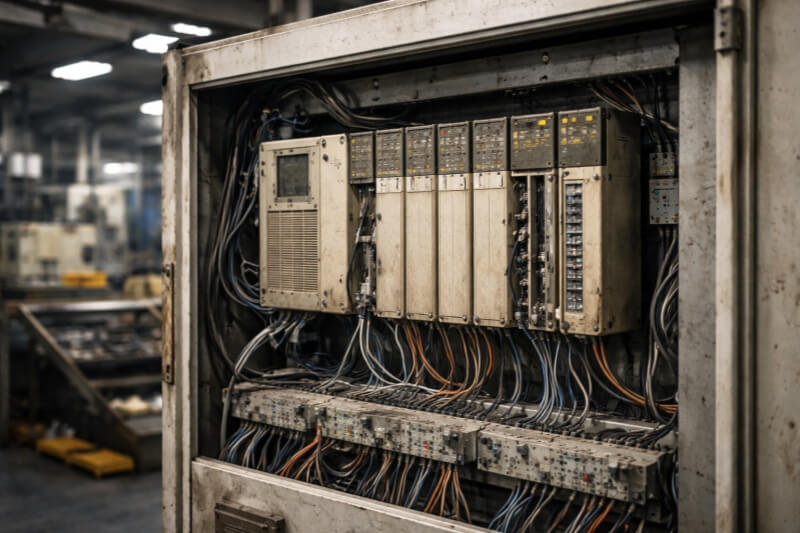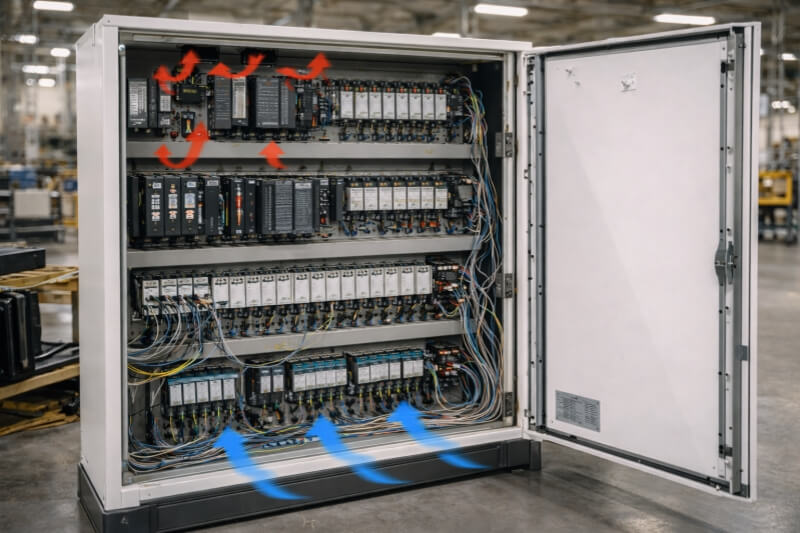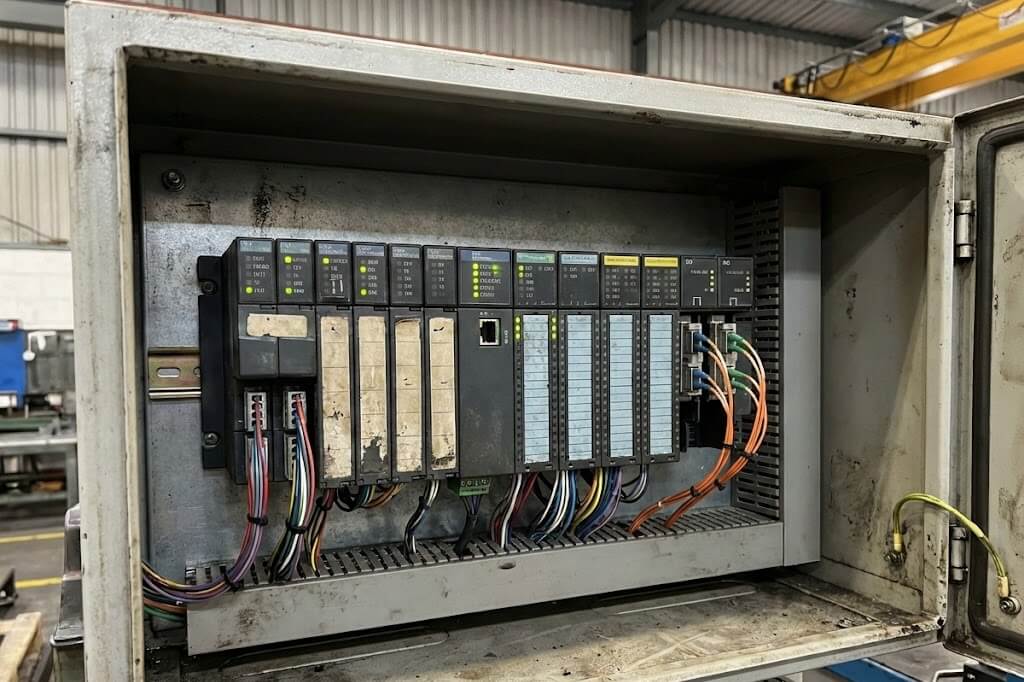
Why Firmware Is the Silent Foundation of PLC Reliability
In modern industrial automation systems, firmware determines how hardware actually behaves. It controls execution timing, communication handling, diagnostics, safety response, and interaction between modules.
Despite this, firmware is often treated as a background detail rather than a controlled asset.
Many PLC systems operate for years without any formal firmware strategy. Controllers, I/O modules, and communication cards run different firmware versions installed at different times by different engineers. As long as production continues, these differences go unnoticed.
The problem appears only when the system is stressed—during failures, replacements, upgrades, or recovery events.
At that point, firmware uncertainty becomes a direct cause of downtime.
How Firmware Drift Happens in Real Facilities
Firmware drift rarely happens intentionally. It accumulates through normal maintenance activity.
A PLC CPU is replaced during a failure and ships with a newer firmware version. An engineer updates a module to solve a specific issue. An HMI upgrade requires a compatibility change. Over time, the system moves away from its original baseline.
Documentation is often incomplete or outdated. Engineers assume compatibility because the system “worked last time.”
Eventually, the automation environment becomes a patchwork of firmware revisions that have never been validated together under real production conditions.
Why Mixed Firmware Environments Are Unstable
PLC platforms are designed and tested around specific firmware combinations. Minor version differences can change communication behavior, diagnostic timing, or internal buffering.
In mixed environments, controllers may interpret data differently, retry communication more aggressively, or respond to faults in unexpected ways.
These behaviors do not always cause immediate failure. Instead, they create subtle instability that only appears under load, during network congestion, or when the system attempts to recover from an interruption.
This makes troubleshooting difficult and time-consuming.
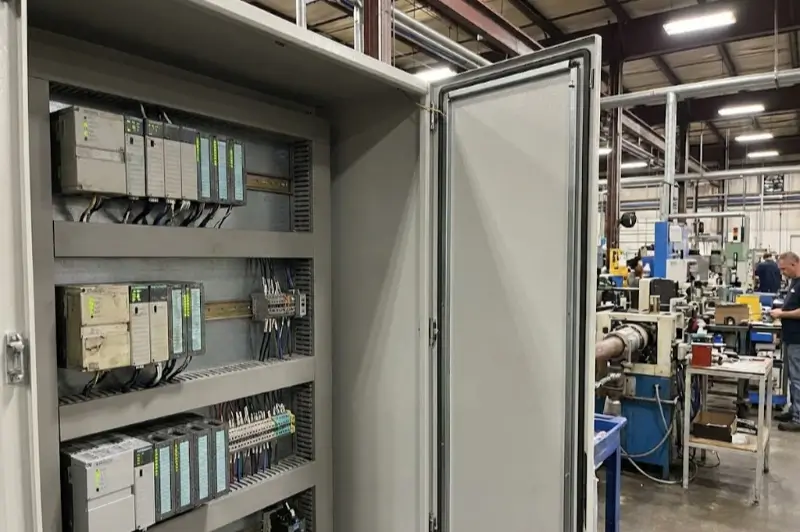
Firmware Mismatch and Extended Downtime
Firmware-related downtime is rarely quick to resolve.
When a system fails and firmware history is unclear, engineers face difficult decisions. Updating firmware carries risk. Rolling back firmware may not be possible. Leaving the system unchanged may prevent recovery.
Time is lost confirming compatibility, searching for documentation, and testing changes under pressure.
What should have been a simple hardware replacement turns into a prolonged outage driven by uncertainty rather than complexity.
Why Firmware Problems Are Often Misdiagnosed
Firmware issues rarely present themselves clearly.
Symptoms include intermittent communication failures, unexplained controller faults, inconsistent I/O behavior, or devices that work normally until a specific sequence occurs.
These symptoms resemble hardware defects, electrical noise, or network issues. Engineers replace modules, reroute cables, or add filters while the firmware mismatch remains.
Because firmware problems often disappear temporarily, teams mistakenly believe they have solved the issue—until it returns later.
Firmware as Part of System Architecture
Firmware is not just software. It is a structural layer of the automation system.
Just as control logic architecture influences system behavior, firmware alignment determines how devices interact under stress. Treating firmware casually undermines even well-designed hardware and networks.
Facilities that view firmware as part of system architecture approach changes differently. They plan updates, document baselines, and validate compatibility before deployment.
This discipline reduces downtime and increases confidence during recovery.
Safety Systems and Firmware Discipline
Safety PLCs and safety I/O are particularly sensitive to firmware alignment.
Safety behavior depends on deterministic timing and verified response paths. Firmware mismatches introduce uncertainty into safety response, fault detection, and diagnostics.
In regulated environments, this uncertainty creates compliance risk. Investigations following abnormal safety behavior often reveal undocumented firmware changes rather than hardware defects.
For safety systems, firmware control is not optional. It is a core reliability requirement.
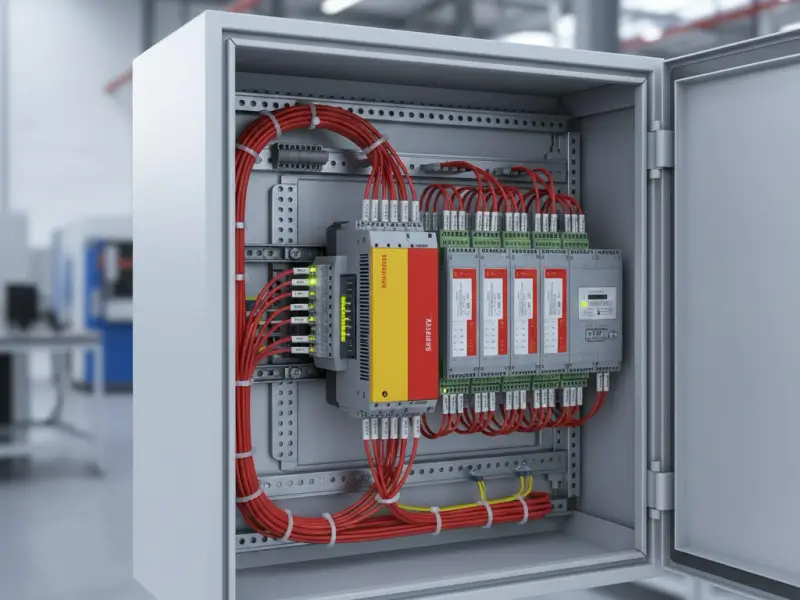
Firmware Lifecycle Management as a Maintenance Strategy
Effective firmware lifecycle management treats firmware versions as controlled assets.
This includes defining approved versions for each system, documenting firmware baselines, and recording all changes. Updates are evaluated, tested, and deployed intentionally rather than reactively.
When failures occur, recovery is faster because engineers know which versions are compatible and which actions are safe.
Firmware discipline transforms troubleshooting from guesswork into procedure.
Spare Parts and Firmware Compatibility
Spare parts strategy and firmware strategy are inseparable.
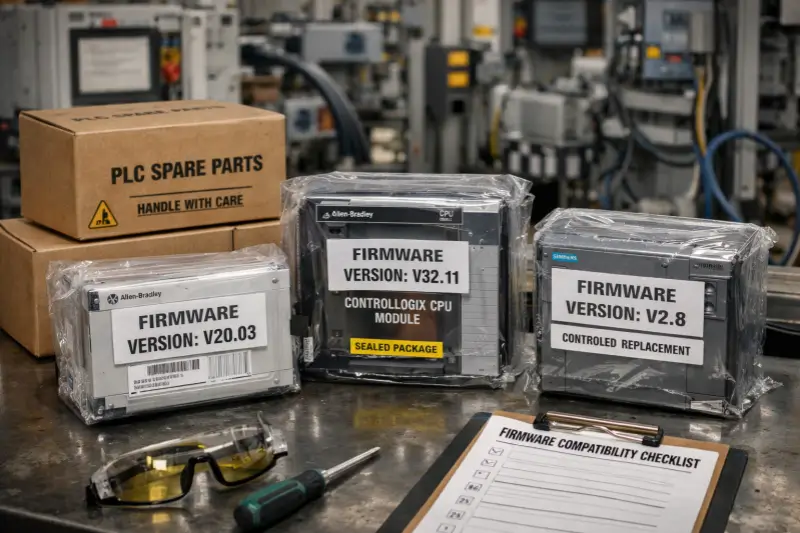
Replacement modules often ship with firmware versions that differ from installed systems. Without a plan, emergency replacements introduce incompatibility at the worst possible time.
Facilities that align spare parts sourcing with firmware strategy avoid this risk. They verify firmware status before installation or maintain approved update paths.
Access to verified, factory-sealed PLC components supports predictable recovery and reduces firmware uncertainty.
Why Repair-Based Strategies Increase Firmware Risk
Repair introduces unknowns.
A repaired module may contain updated or altered firmware. Even if the hardware functions correctly, firmware behavior may differ from original specifications.
This uncertainty complicates compatibility and increases downtime risk.
For critical systems, replacement-first strategies reduce firmware variability and restore known behavior more reliably than repair-based approaches.
Firmware, Obsolescence, and EOL Transitions
As PLC platforms age, firmware support becomes fragmented. Older firmware versions may no longer be supported, while newer versions introduce compatibility changes.
During EOL transitions, firmware uncertainty increases. Engineers may be forced to upgrade firmware while retaining legacy hardware.
Without a documented lifecycle strategy, these transitions become chaotic and risky.
Facilities that plan firmware transitions alongside hardware lifecycle maintain stability through obsolescence events.
Why Firmware Discipline Supports Multi-Warehouse Recovery
In modern supply chains, spare parts may ship from multiple regions. Firmware discipline ensures that parts sourced from different locations behave consistently.
Without this discipline, multi-warehouse fulfillment increases variability instead of resilience.
When firmware baselines are known, global inventory becomes an advantage rather than a risk.
Firmware Management as a Leadership Responsibility
Firmware issues persist where ownership is unclear.
When no one is responsible for firmware governance, changes occur ad hoc. Maintenance teams prioritize speed over consistency. Documentation falls behind reality.
Organizations that assign clear responsibility for firmware lifecycle management experience fewer surprises and faster recovery.
Firmware discipline is as much a leadership issue as a technical one.
Firmware Is Invisible Until It Fails
Firmware rarely draws attention when systems operate normally. Its importance becomes visible only during failure.
Treating firmware as a controlled, documented asset transforms reliability. It reduces downtime, simplifies recovery, and restores confidence during critical events.
In industrial automation, stability depends not only on hardware quality but on firmware discipline.