When Downtime Is No Longer a Hypothetical Risk
Every maintenance team has a downtime story.
Not the one written in procedures or risk assessments, but the one everyone remembers because it happened at the worst possible moment.
This one started on a Tuesday morning.
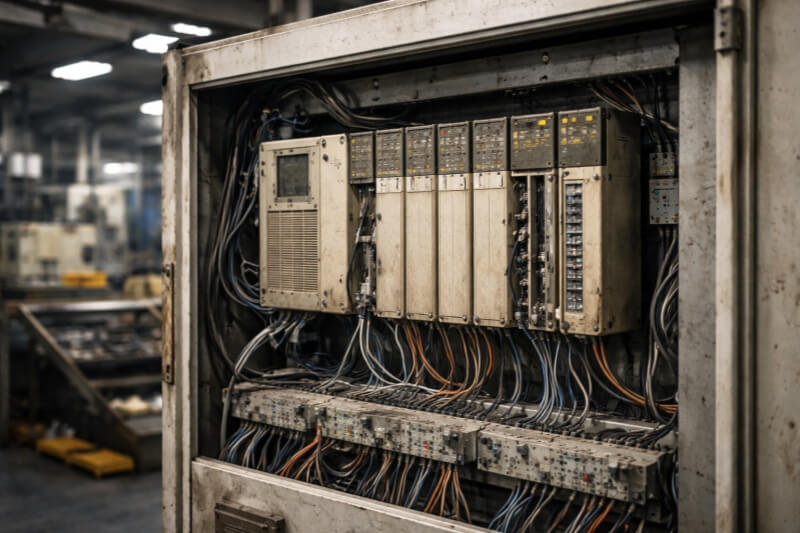
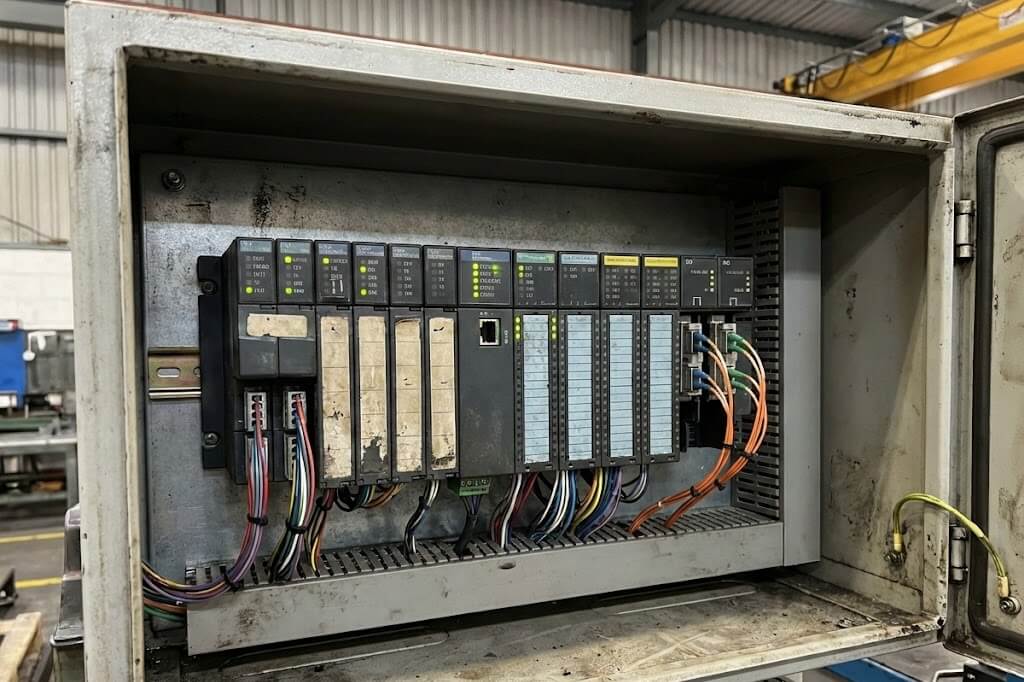
The line had been running continuously for weeks. Output was stable. No alarms, no early warnings, no predictive alerts that suggested anything unusual. Then, without drama, the ControlLogix CPU stopped responding.
No catastrophic noise.
No visible damage.
Just silence.
Within minutes, operators realized the line was not coming back on its own.
The First Hour: Everything Looks Simple
At first, the situation didn’t seem critical.
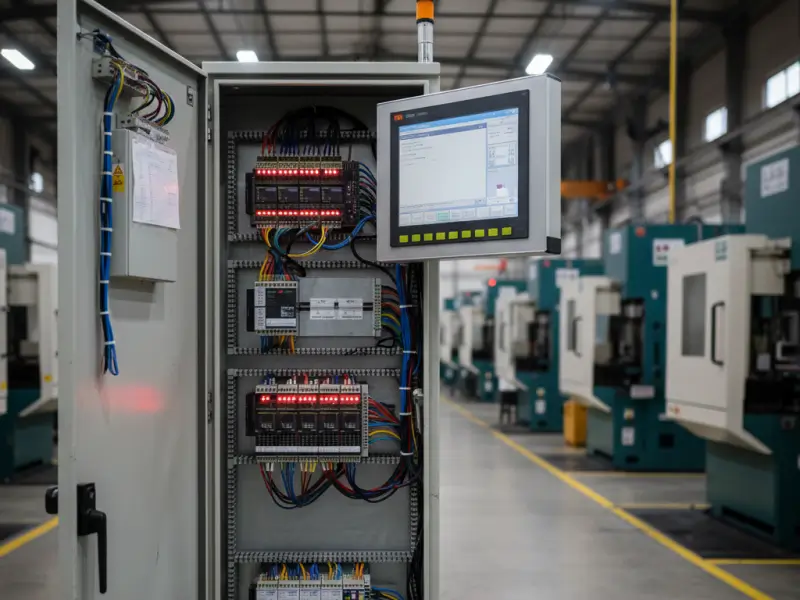
The controller rebooted, but communication to the I/O rack was unstable. The HMI froze intermittently. Safety interlocks refused to reset. A quick inspection ruled out power issues and cabling.
It looked like a controller failure.
This is the moment where most factories still feel calm.
There is usually confidence that “we can source the part.”
The part number was clear.
The fault was isolated.
The solution appeared straightforward.
Until procurement checked availability.
OEM Reality: Eight Weeks Is Not a Plan
The OEM channel was contacted immediately.
The response was polite, professional, and entirely unusable.
The CPU was available, but not in stock. Lead time was quoted at six to eight weeks. No acceleration options. No alternatives offered.
For a production line operating 24/7, eight weeks is not a lead time. It is a shutdown.
At this point, the issue stopped being technical and became operational.
Engineering could fix the problem.
Maintenance knew what they needed.
Procurement could not deliver fast enough.
The Decision Point Most Teams Underestimate
There is a moment in every downtime event where decisions start to drift.
Pressure builds. Management wants answers. Every hour without output increases cost. This is where teams are tempted to take shortcuts.
Gray-market sellers appear. Prices look attractive. Promises are made. Verification questions are brushed aside.
This team paused instead.
They asked a different question:
Not “who has the cheapest CPU,”
but “who can deliver a verified, compatible replacement the fastest.”
That question changed the outcome.
Why Multi-Warehouse Availability Matters More Than Brand Promises
The spare part was not rare.
It was simply not where the OEM expected it to be.
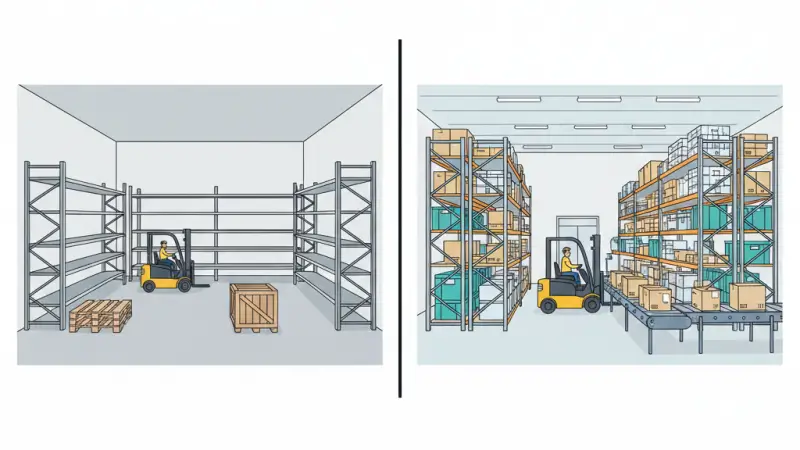
Independent industrial suppliers with distributed inventory often carry stock that OEM channels do not prioritize. The difference is not quality—it is logistics strategy.
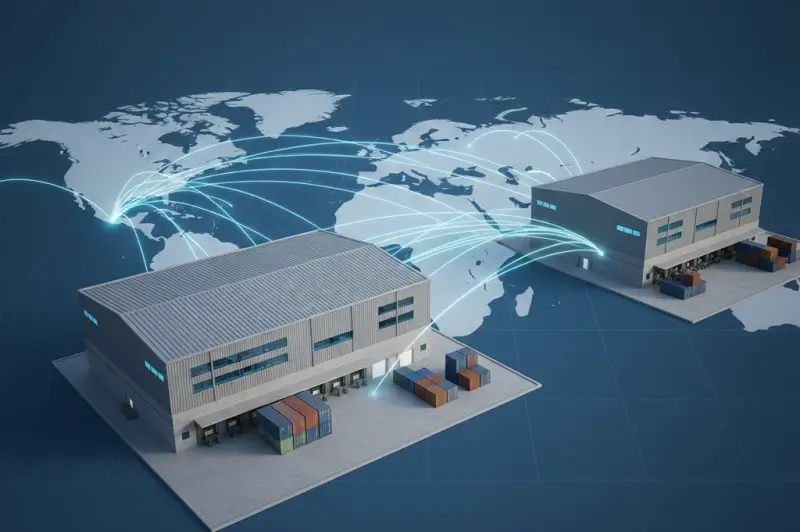
In this case, the replacement CPU was located outside the customer’s country, but inside a supplier’s global warehouse network.
Inventory checks were run across multiple locations, including suppliers that maintain real-time Allen-Bradley spare parts availability across multiple regions, rather than relying on factory production schedules alone.
(see available ControlLogix and CompactLogix inventory here:
https://topautodevice.com/collections/allen-bradley)
No waiting for manufacturing.
No allocation delays.
Just existing stock, already verified.
This is the advantage of a multi-warehouse fulfillment model.
Logistics Is Part of Engineering Whether We Like It or Not
Once the part was confirmed in stock, the next concern was transit time.
Customs clearance, export handling, and carrier reliability matter just as much as the part itself. A CPU that ships quickly but gets stuck in transit does not reduce downtime.
This is where experience matters.
The shipment was dispatched the same day.
Documentation was prepared correctly.
No unnecessary routing changes.
No guesswork.
Forty-eight hours later, the replacement arrived.
Not “soon.”
Not “expedited.”
Physically on site.
Installation Was the Easy Part
Once the part arrived, the rest of the recovery was almost anticlimactic.
Firmware compatibility had already been checked. The spare matched the existing system revision. No upgrades were required. No rollback risks.
The controller was installed.
The rack stabilized immediately.
Communication recovered.
The line restarted.
Total downtime: just under two days.
For a failure that could easily have turned into weeks, that difference mattered.
Why This Was Not Luck
It is tempting to treat outcomes like this as fortunate exceptions.
They are not.
What made the difference was not heroics or last-minute negotiation. It was structural preparation, even if the customer didn’t realize it at the time.
The supplier already supported multiple automation brands and controller families from stocked inventory, which meant alternatives and equivalents could be evaluated quickly if the exact SKU had not been available.
(This kind of cross-brand readiness is typically only possible with suppliers that maintain broad platform coverage, such as those listed here:
https://topautodevice.com/pages/shop-by-brands)
Several factors aligned:
-
The supplier carried real inventory, not future promises
-
Stock was distributed across regions
-
Verification happened before shipping, not after failure
-
Logistics experience reduced transit uncertainty
-
Replacement was prioritized over repair delays
None of this is accidental.
The Hidden Metric Behind This Story: MTTR
Most factories track downtime hours.
Fewer track Mean Time to Recovery (MTTR) with discipline.
MTTR is where multi-warehouse strategies show their real value.
The failure itself may be unavoidable.
The recovery time is not.
Reducing MTTR from weeks to days changes production stability, overtime costs, management escalation, and long-term sourcing decisions.
Once teams experience fast recovery once, expectations change permanently.
Why Single-Warehouse Supply Fails Under Pressure
Single-warehouse suppliers can be reliable in normal conditions.
Downtime is not normal.
When inventory is centralized, any disruption becomes absolute. When inventory is distributed, disruption becomes manageable.
Multi-warehouse fulfillment does not eliminate failure.
It reduces the chance that failure becomes catastrophic.
That distinction matters.
Replacement Instead of Repair: An Unspoken Advantage
Another quiet factor in this recovery was the decision to replace rather than repair.
Repair introduces uncertainty.
Diagnostics take time.
Outcomes vary.
Replacement restores known behavior immediately.
Suppliers that support replacement-first policies, especially with multi-year replacement warranties, allow maintenance teams to focus on recovery instead of diagnosis during downtime.

Planning for the Next Failure, Not the Last One
The value of this experience was not just the recovery.
It reshaped how spare parts planning was approached afterward.
Critical modules were identified.
Backup sourcing was formalized.
Multi-warehouse suppliers were prioritized.
Firmware discipline was documented.
The next failure, when it comes, will not be handled the same way.
And that is the point.
Final Thoughts: Downtime Is a Supply Chain Problem Too
It is easy to frame downtime as a technical failure.
In reality, it is often a supply chain failure.
The difference between weeks and days is rarely about engineering brilliance. It is about whether the right part exists, in the right place, at the right moment.
Factories that understand this stop chasing the lowest unit price and start building recovery capability.
That shift is what defines resilient operations in 2026.