Obsolescence Is a Predictable Phase, Not a Surprise Event
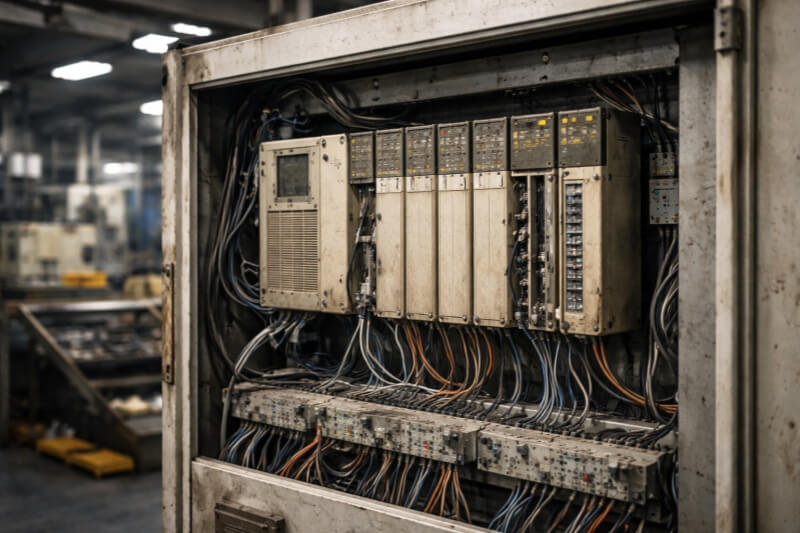
Every PLC platform eventually reaches end-of-life. Manufacturers discontinue production, spare parts become scarce, and support gradually declines.
Despite this predictable lifecycle, many facilities treat obsolescence as an unexpected crisis rather than a manageable transition. Replacement decisions are delayed until failure forces action, often under severe time pressure.
At that moment, engineering choice becomes limited and expensive.
Viewing obsolescence as a planned phase instead of an emergency fundamentally changes reliability strategy.
The Three Paths After PLC Discontinuation
When a PLC platform approaches end-of-life, organizations typically face three options.
Full replacement with a modern platform offers long-term stability but requires engineering time, validation, and downtime planning. Strategic spare-parts stocking preserves the existing system but introduces inventory and lifecycle management challenges. Partial redesign blends new and legacy components yet increases architectural complexity.
None of these paths is universally correct. The optimal choice depends on production criticality, remaining system lifespan, and budget horizon.
The key is deciding before failure occurs.
Why Emergency Migration Creates the Highest Risk
Migration performed during downtime carries the greatest uncertainty. Logic conversion, communication reconfiguration, and hardware compatibility must be solved under intense time pressure.
Testing is shortened. Documentation may be incomplete. Hidden dependencies emerge only after restart.
These rushed transitions often introduce new instability even after production resumes.
Planned migration, by contrast, allows staged validation and controlled risk.
Strategic Stocking as a Bridge, Not a Solution
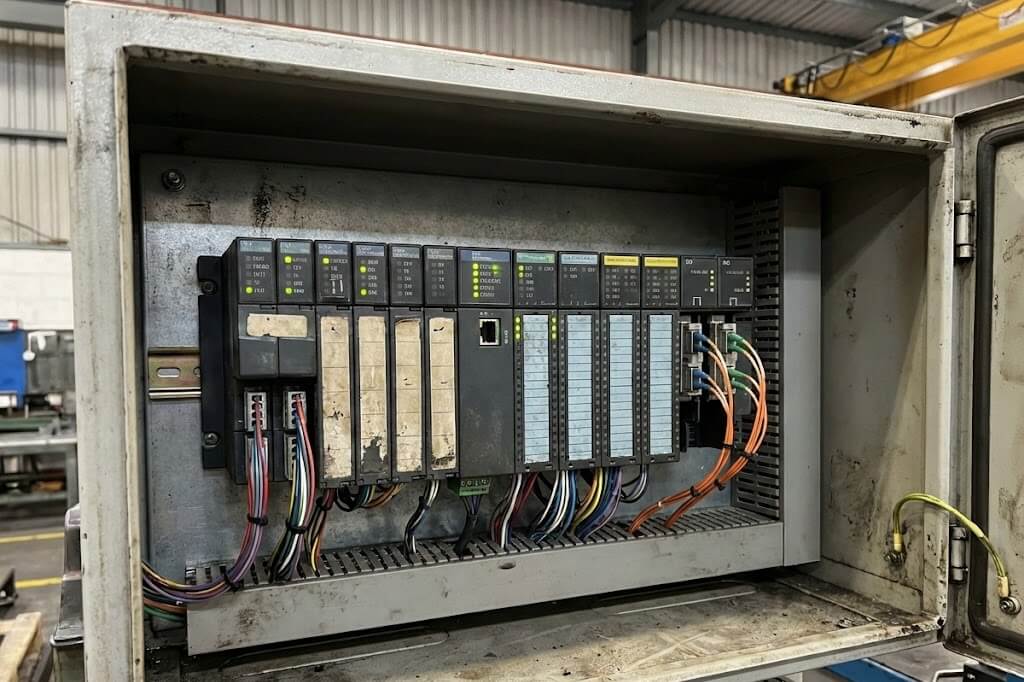
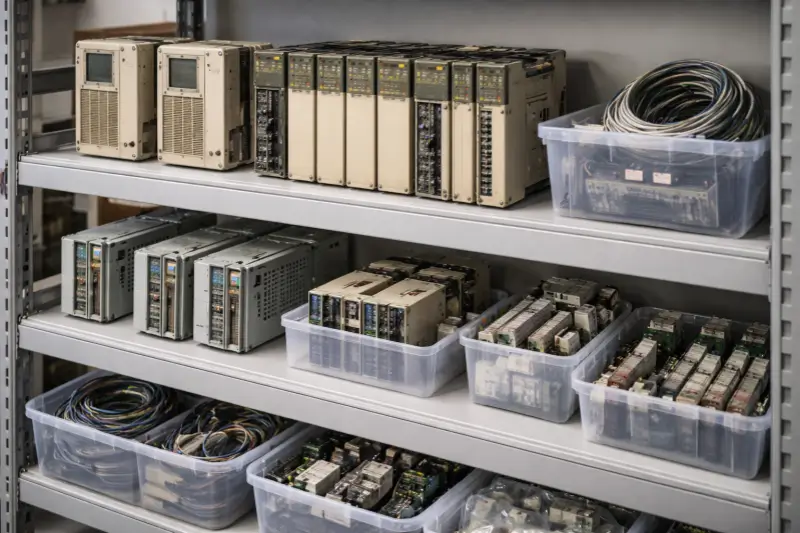
Stocking spare PLC components is often the fastest way to maintain uptime in aging systems. However, inventory alone does not solve obsolescence.
Without lifecycle planning, stocked parts eventually become depleted or unusable. Firmware compatibility, storage conditions, and long-term availability all influence whether stocked inventory truly protects production.
Strategic stocking works best as a bridge toward modernization rather than a permanent endpoint.
Maintaining access to verified, factory-sealed legacy PLC components supports this bridge strategy and prevents emergency sourcing during failures
https://topautodevice.com/collections/allen-bradley

Redesign Decisions Driven by Production Reality
Complete system redesign is sometimes technically ideal but operationally impractical. Production schedules, validation requirements, and capital planning all influence timing.
Successful facilities align redesign decisions with maintenance windows, product transitions, or capacity expansion projects. This reduces disruption and spreads cost over planned change rather than unexpected failure.
Engineering strategy becomes synchronized with business rhythm.
Firmware, Documentation, and Knowledge in EOL Planning
End-of-life planning is not purely hardware-driven. Firmware baselines, documentation accuracy, and institutional knowledge all determine migration difficulty.
Well-documented systems migrate smoothly. Poorly documented systems require rediscovery before change is possible.
Thus, lifecycle readiness reflects years of engineering discipline rather than a single project decision.
Multi-Warehouse Supply and the Modern EOL Landscape
Global supply networks have reshaped obsolescence management. Components may remain available in one region long after disappearing elsewhere.
Multi-warehouse sourcing extends usable system life and provides time for thoughtful migration planning. Without this visibility, facilities may assume parts are unavailable and rush into premature redesign.
Access to distributed inventory therefore becomes part of lifecycle strategy, not merely procurement convenience
https://topautodevice.com
Deciding When Replacement Truly Makes Sense
Replacement is justified when risk of failure outweighs migration cost. Indicators include rising failure frequency, unstable spare-parts supply, safety compliance pressure, or inability to integrate with newer systems.
When these thresholds are crossed, delay increases long-term disruption.
Clear decision criteria transform replacement from emotional debate into engineering judgment.
Final Thoughts
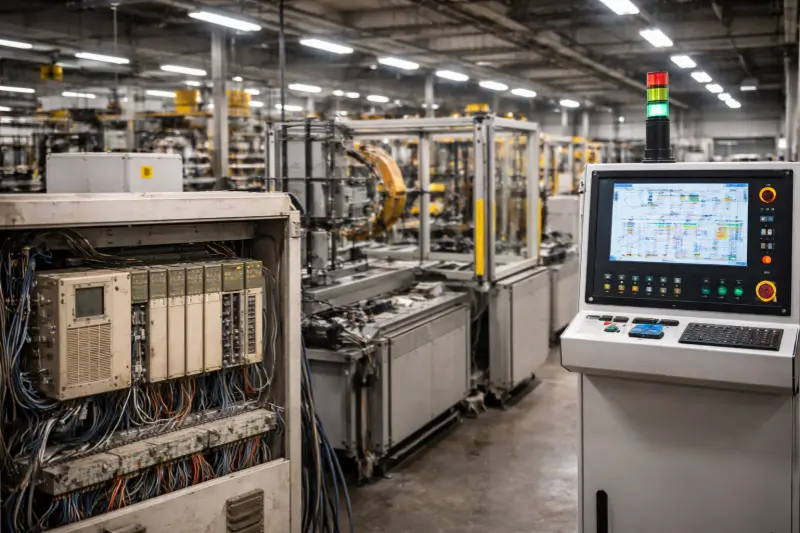
PLC obsolescence is inevitable, but crisis is not. Facilities that plan lifecycle transitions maintain uptime, control cost, and reduce operational stress.
The difference lies not in technology, but in timing, visibility, and preparation.
In industrial automation, the most reliable systems are not those that never age, but those whose aging is anticipated and managed.