Why PLC Failures Are Often Electrical, Not Electronic
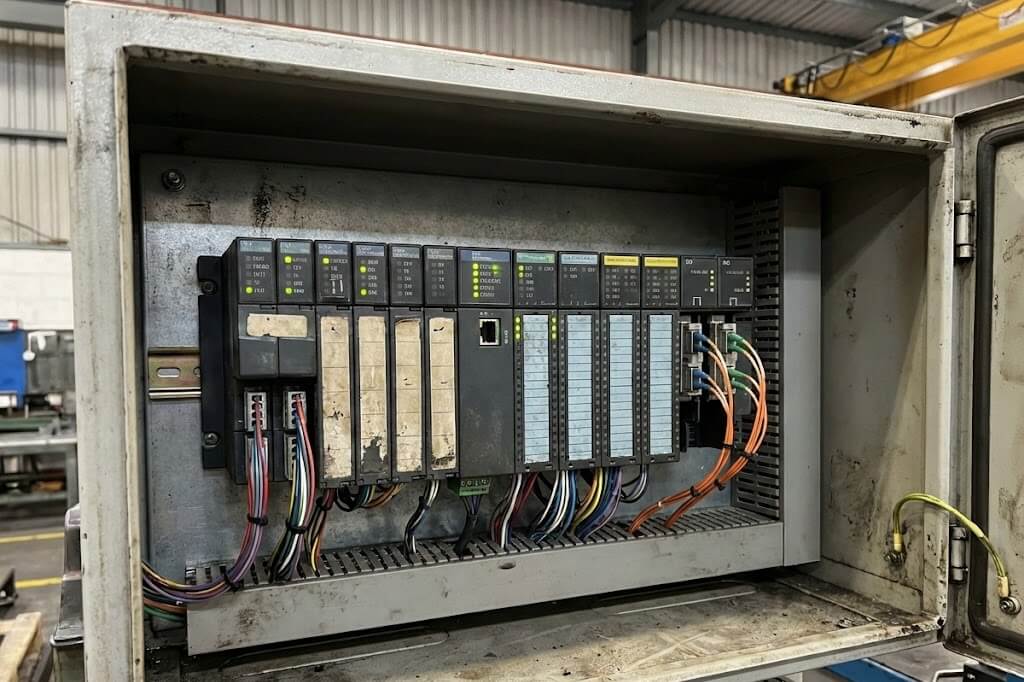
When a PLC system suddenly stops responding, most troubleshooting efforts immediately focus on hardware. Engineers check CPUs, I/O modules, communication cards, and firmware versions. Spare parts are ordered, replacements are installed, and logic is reloaded.
In many factories, this process repeats again and again.
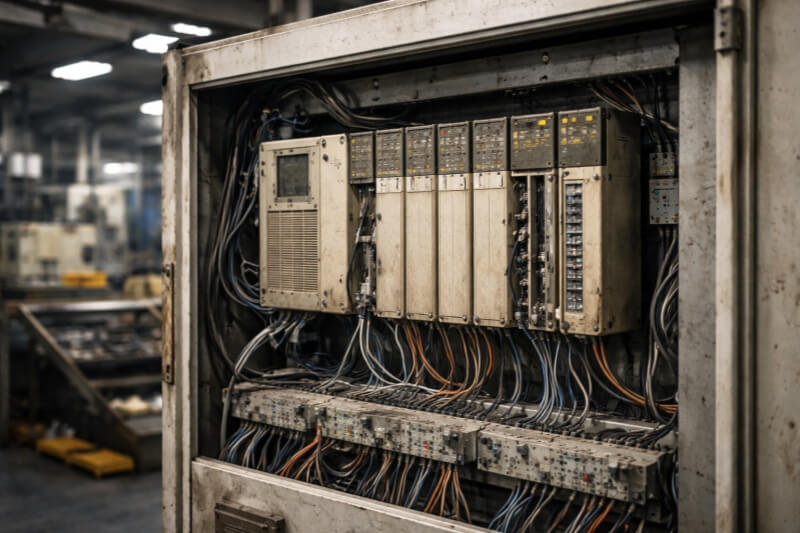
What often goes unnoticed is that the PLC itself may not be the real problem. Instead, the failure originates from the electrical environment in which the controller operates. Power quality issues and grounding problems quietly damage automation systems long before any visible fault appears.
By the time a PLC fails completely, electrical stress has often been accumulating for months or even years.
This is why replacing hardware without addressing power quality frequently leads to repeat failures.
How Power Quality Directly Affects PLC Stability
PLCs are designed to tolerate a range of voltage conditions, but they are not immune to unstable power. Industrial environments routinely expose automation systems to electrical disturbances that are far more severe than office or laboratory settings.
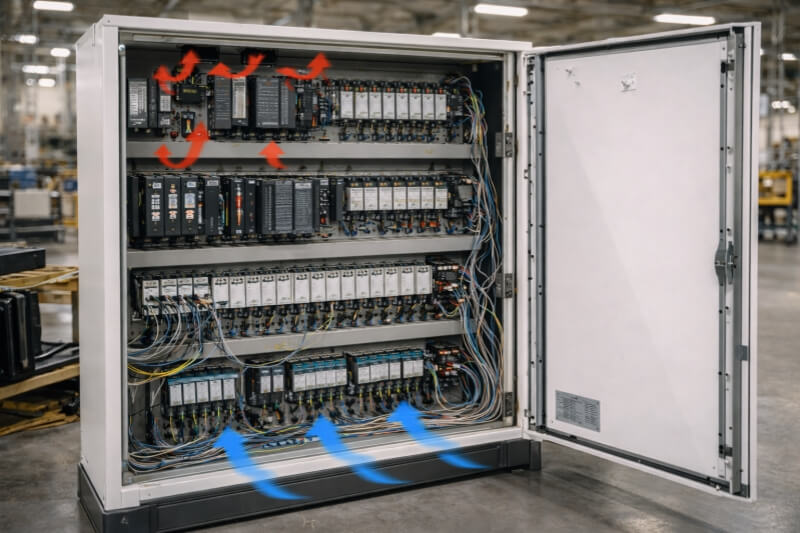
Common power quality issues include voltage sags during large motor starts, momentary outages caused by upstream switching, harmonic distortion from variable frequency drives, and high-frequency noise introduced by poorly filtered equipment.
These disturbances may be brief, but their cumulative effect is significant. Internal PLC power supplies must constantly regulate fluctuating input conditions. Over time, this stress degrades components and reduces reliability.
The result is not always a dramatic failure. More often, systems exhibit intermittent behavior that is difficult to diagnose.
Why Power Problems Rarely Leave Clear Error Messages
One of the most frustrating aspects of power-related PLC issues is the lack of clear diagnostics.
A PLC may reset unexpectedly without logging a meaningful fault. Communication modules may drop connections and recover before alarms are triggered. I/O behavior may become erratic only under specific load conditions.
From an engineering perspective, these symptoms closely resemble hardware defects or firmware bugs. As a result, teams replace modules that appear suspicious while the underlying electrical problem remains.
This misdirection extends downtime and increases maintenance cost without solving the root cause.
Grounding: The Most Underrated Reliability Factor
Grounding is often treated as a regulatory requirement rather than a performance factor. As long as grounding passes inspection, it is assumed to be adequate.
In reality, improper grounding creates reference voltage differences between devices. These differences introduce noise into signal lines and communication networks, particularly in high-speed Ethernet-based automation systems.
Poor grounding increases susceptibility to electromagnetic interference. It also amplifies the impact of transient voltage events, allowing noise to propagate across control systems.
In many PLC troubleshooting cases, correcting grounding practices restores system stability without replacing a single component.
How Grounding Issues Disrupt Communication
Modern PLC systems rely heavily on deterministic communication. EtherNet/IP, Profinet, and similar protocols assume stable reference voltages and clean signal paths.
When grounding is inconsistent, communication timing becomes unpredictable. Packets are delayed, retries increase, and controllers expend additional processing resources maintaining network stability.
These effects are subtle but cumulative. Over time, communication instability manifests as performance degradation, unexplained faults, and eventually system downtime.
Because communication failures appear logical rather than electrical, grounding issues are often overlooked.
Why Electrical Issues Mimic Hardware Failure
Electrical disturbances rarely cause immediate, permanent damage. Instead, they create conditions where components operate near their tolerance limits.
A PLC may function normally for days or weeks before resetting under a specific combination of load, temperature, and electrical noise. When engineers attempt to reproduce the issue during testing, the system behaves normally.
This intermittent behavior strongly resembles failing hardware.
As a result, spare parts are replaced, firmware is updated, and logic is modified—all without addressing the electrical environment that caused the issue in the first place.
The Long-Term Cost of Ignoring Power Quality
Power-related problems rarely remain isolated. As electrical stress continues, failures become more frequent and recovery becomes slower.
Each unexplained failure erodes confidence in the system. Maintenance teams become reactive. Spare parts consumption increases. Downtime planning becomes unpredictable.
Eventually, even new replacement parts begin to fail prematurely because they are exposed to the same conditions that damaged their predecessors.
At this stage, the cost is no longer limited to hardware. Production losses, engineering hours, and emergency sourcing all compound the impact.
Power Conditioning as a Preventive Strategy
Power conditioning is often viewed as optional or secondary to control hardware. In practice, it is one of the most effective reliability investments a facility can make.
Isolation transformers, surge protection devices, line reactors, and proper filtering reduce the severity of electrical disturbances before they reach sensitive automation equipment.
Combined with disciplined grounding practices, power conditioning stabilizes the environment in which PLCs operate.
Facilities that implement these measures experience fewer unexplained failures and longer equipment lifespans.
Why Electrical Issues Increase Downtime Risk
Electrical problems complicate troubleshooting. Because symptoms are inconsistent, engineers spend more time testing, swapping components, and monitoring behavior.
This increases mean time to repair and extends downtime events.
Having immediate access to verified replacement PLC modules helps restore operation quickly, but without correcting electrical conditions, failures are likely to recur.
For facilities running multiple automation platforms, maintaining access to replacement parts across brands reduces downtime exposure during recovery.
Electrical Stress and Obsolescence
Electrical instability accelerates aging. Components exposed to repeated voltage stress degrade faster and reach end-of-life sooner.
This creates a hidden link between power quality and obsolescence risk. Systems operating in unstable environments face higher replacement rates and earlier transitions into unsupported hardware generations.
As OEM lead times increase, this risk becomes more difficult to manage.
Why Electrical Discipline Supports Spare Parts Strategy
A disciplined electrical environment extends the usable life of automation components. This reduces emergency sourcing and allows spare parts strategies to remain proactive rather than reactive.
When failures do occur, recovery is faster because replacement components operate under controlled conditions.
For widely deployed platforms, reliable access to verified replacement parts supports both recovery and long-term planning.
Reliability Begins Before the PLC
PLC reliability does not begin at the controller. It begins at the electrical layer.
Power quality and grounding decisions shape how automation systems behave under stress. Ignoring these factors turns minor electrical disturbances into recurring operational failures.
Facilities that treat electrical discipline as part of automation strategy achieve higher uptime, lower maintenance cost, and more predictable operations.