What Is IO-Link?
IO-Link is a point-to-point communication protocol for connection of sensors and actuators to automation environments. io link provides bi-directional communication as compared to only binary In/Out. Thus, engineers can not only pull process data from a given device, but can also push parameters back to it.
The following spellings refer to the same technology: IO-Link, io-link, i o link, iolink, i/o link and io links. However writers and engineers choose to spell it, the intent is the same: Provide smarter, more flexible, and maintainable automation.
Why IO-Link Matters to the Modern Factory
More Data Transparency
Traditional sensors offered engineers simple on/off signals. Using io link protocol, a device provides enhanced diagnostic data like temperature, cycle counts, and even error codes. That context enhances predictive maintenance and reduces downtime.
Easier Integration of Devices
IO-Link reduces commissioning time for projects. Using standardized io cables, engineers have done away with complex wiring schemes. Sensors and actuators are automatically recognized and can upload parameters from the controller.
Reduced Costs
IO-Link requires IO-Link masters to be set up. However, the savings in downtime, reduced maintenance costs, and replenishment of spare parts quickly covers the investment.
Main Elements of IO-Link
IO-Link Masters and Devices
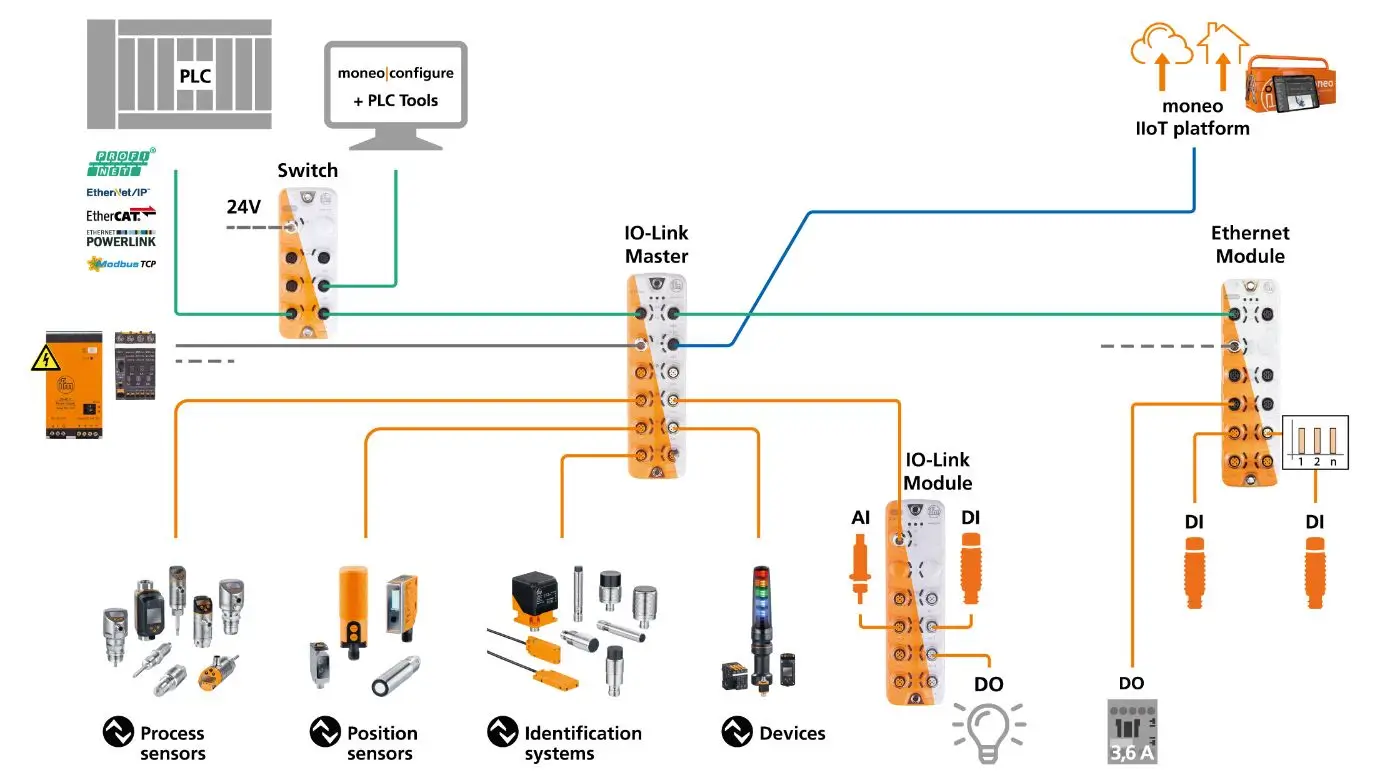
At the center of each IO-Link system is the IO-Link Master, which has an ultimate link to a PLC or control system. Each port on a master has communication with a device, like a sensor or actuator. These devices can vary greatly, and there could be dozens of them linked to a master. Moreover, multiple io links can be controlled at once, which can vary with each manufacturer.
IO-Link Protocol
The io link protocol was developed to be independent of the device vendor, which means products can have interoperability between vendor products. The protocol is also sufficiently low-cost to facilitate connections using 24V unshielded three-wire io cables that generally don't have a complicated setup.
IODD Files
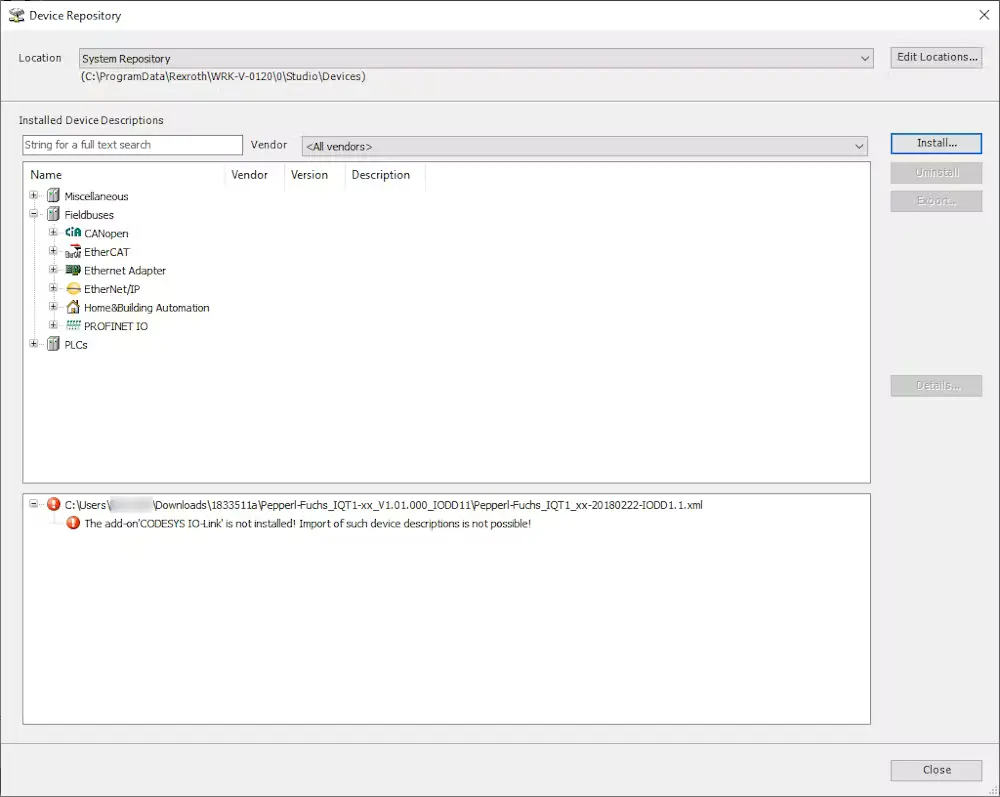
An IODD (IO Device Description) file is included with every IO-Link device. An IODD file is XML-based and contains all device parameters, diagnostic information, and identification data. With IODD files, an engineer can configure device parameters in a common way across different software platforms.
Uses of IO-Link in Industry
-
Smart Sensors: Proximity sensors, temperature sensors, and pressure sensors with io link offer diagnostic data instead of simple switching information.
-
Actuator Control: With IO-Link, pneumatic valves can communicate overall health and receive parameter changes.
-
Machine Vision: Some machine vision systems have the option to use IO-Link for communication and diagnostics.
-
Quality Control: For manufacturers with IO-Link compliant devices, the opportunity to diagnose process deviations is improved with early capture.
IO-Link vs. Traditional Communication
| Feature | Traditional I/O | IO-Link |
|---|---|---|
| Data Direction | One-way | Bidirectional |
| Diagnostics | Minimal | Rich device diagnostics |
| Wiring | Complex | Standardized i/o link cable |
| Configuration | Manual | Automated via IODD |
Practical Benefits of IO-Link for Engineers and Managers
-
Plug-and-Play Replacement – Swap devices without manual reconfiguration, thanks to stored parameters.
-
Future-Proofing – Supports Industry 4.0, IIoT, and smart manufacturing initiatives.
-
Vendor Neutrality – Because IO-Link is standardized, systems can include mixed-brand devices without compatibility issues.
Challenges and Potential Issues
-
Requires an investment in IO-Link masters.
-
Some devices may not allow advanced features to be fully exposed.
-
Maintenance teams may need training if they are not very familiar with digital protocols.
Getting Started with IO-Link
-
Identify Candidates – Start with sensors or actuators that provide diagnostic benefits.
-
Install an IO-Link Master – Connect it to your PLC or industrial Ethernet network.
-
Use Standard io cables – Simplify wiring and reduce costs.
-
Leverage IODD Files – Import them into your engineering software for easy device configuration.
-
Scale Gradually – Add more io links over time as the benefits become clear.
Future of IO-Link in Smart Manufacturing
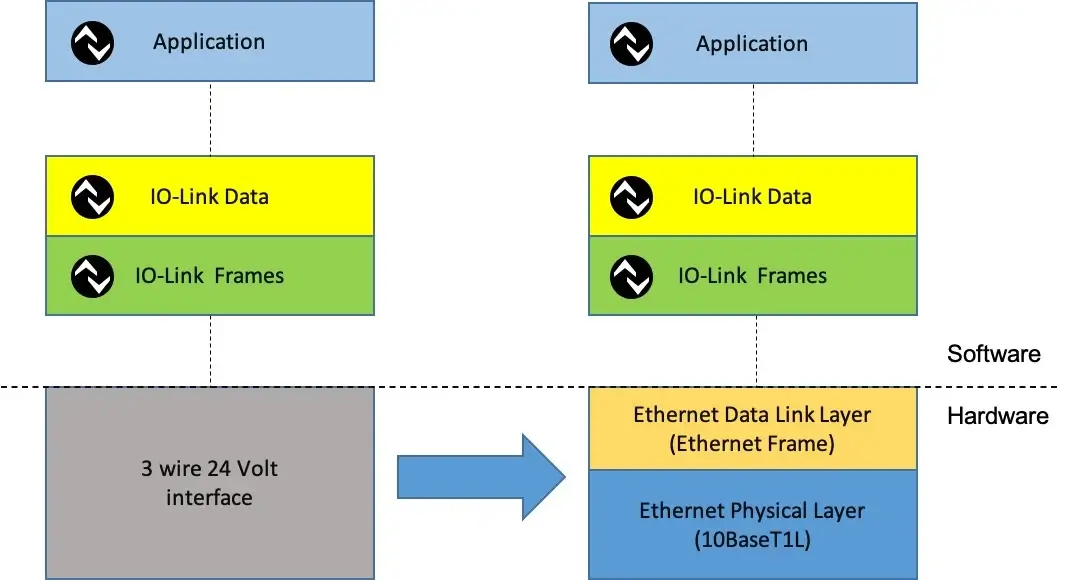
As Industry 4.0 and IIoT expand, io link protocol will remain critical. Expect tighter integration with cloud platforms, edge computing, and AI-driven predictive analytics. io link will continue evolving from simple device communication into a foundation of digital factories.
FAQ Section
What is IO-Link used for?
IO-Link is used to connect sensors and actuators to automation systems, enabling two-way communication. It provides not only process data but also diagnostics and configuration options, making production lines more transparent and efficient.
What does an IODD file do?
An IODD (IO Device Description) file describes all parameters, diagnostics, and identification data of an IO-Link device. It allows engineers to configure and manage devices in a standardized way across different platforms.
What type of cables are used in IO-Link?
IO-Link uses standard unshielded 24V three-wire cables, often the same as conventional sensor wiring. These low-cost io cables simplify installation and reduce complexity.
How is IO-Link different from traditional I/O?
Traditional I/O offers only one-way binary signals, while IO-Link supports bidirectional data transfer. It delivers detailed diagnostics, uses standard cabling, and allows automatic device configuration through IODD files.
Is IO-Link compatible with all PLCs?
IO-Link is vendor-independent and works with any PLC that supports IO-Link masters. This vendor neutrality allows engineers to mix devices from different manufacturers in the same system.