Why “Zero Downtime” Has Become a Realistic Goal in 2026
For decades, unplanned downtime was treated as unavoidable. Maintenance teams accepted that when a PLC failed, production stopped—sometimes for hours, sometimes for days.
In 2026, that mindset no longer holds.
Modern factories operate under intense pressure: tighter margins, higher energy costs, complex supply chains, and customers who expect uninterrupted delivery. A single PLC failure can ripple through scheduling, labor allocation, logistics, and customer trust.
At the same time, technology has evolved. Predictive maintenance can now detect early failure signals. ControlLogix and CompactLogix platforms dominate mission-critical automation. Global spare parts supply has become more flexible—if planned correctly.
The missing link is no longer detection. It is execution.
Zero downtime is not achieved by luck, faster technicians, or better alarms. It is achieved by a deliberate spare parts strategy built around ControlLogix and CompactLogix systems.
This guide explains how.
Understanding Downtime at the System Level (Not the Component Level)
Most spare parts strategies fail because they focus on individual parts instead of system behavior.
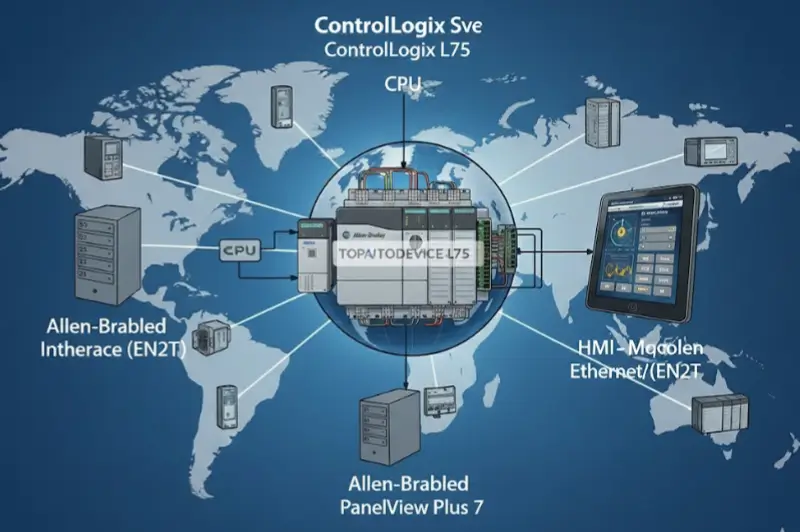
A ControlLogix or CompactLogix system is not a single device. It is an ecosystem that includes the CPU controller, power supplies, communication modules such as EtherNet/IP, local and remote I/O, motion and safety components, network infrastructure, and firmware and configuration dependencies.
A failure anywhere in this chain can stop production.
Consider two scenarios. In the first, a plant stocks spare I/O cards but no spare CPU. When the CPU fails, the entire rack becomes useless. In the second, a plant stocks a spare CPU but no communication module. The controller boots, but the line still cannot communicate.
Both strategies fail because neither considers the system as a whole.
A zero-downtime strategy begins with system mapping, not SKU counting.
Why ControlLogix and CompactLogix Require Special Spare Parts Planning
ControlLogix and CompactLogix platforms are popular because they are powerful, flexible, and scalable. These same traits also make them complex.
ControlLogix systems typically rely on centralized control logic, creating a single point of failure. They depend heavily on EtherNet/IP communication, have firmware dependencies across modules, and are often used in 24/7 continuous processes with deep integration into motion, safety, and HMI systems.
CompactLogix systems, while cost-optimized, are less tolerant to partial failures. They are often deployed in distributed machine cells with limited redundancy and are frequently embedded in OEM machinery where documentation may be incomplete.
Because of these characteristics, OEM lead time alone is not an acceptable recovery strategy.
The Real Cost of Downtime and Why Speed Beats Price
Downtime is often underestimated because its cost is fragmented. It includes lost production output, idle labor, scrap and rework, unstable restarts, contract penalties, emergency freight, and management escalation.
In many industries, one hour of downtime costs more than an entire PLC CPU.
This is why zero-downtime planning prioritizes availability over unit price, speed of recovery over repair optimism, and certainty over theoretical cost savings.
Step 1: Classify ControlLogix and CompactLogix Components by Downtime Impact
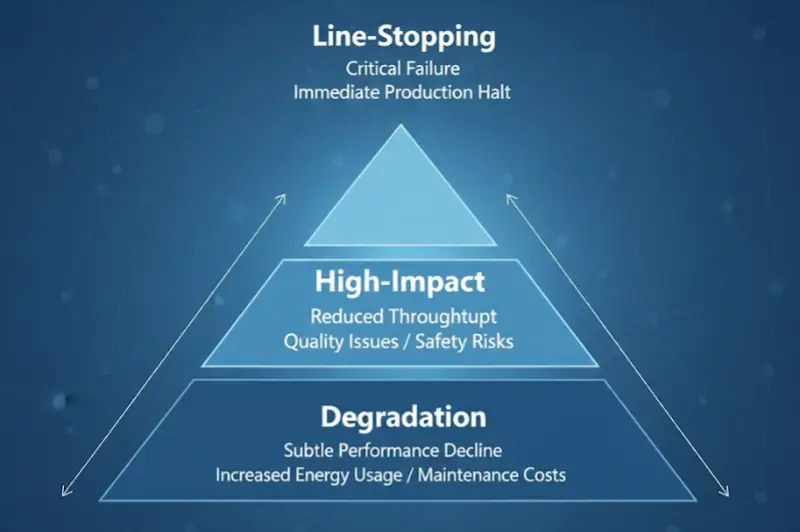
Not all modules are equal. A zero-downtime strategy begins by ranking components based on impact, not failure probability.
Tier 1 components are line-stopping components that must be stocked. These include ControlLogix CPU modules such as 1756-L7x and L8x series, CompactLogix CPUs in the 1769-L and 5069-L families, EtherNet/IP communication modules like EN2T and EN3TR, safety controllers such as GuardLogix, and power supplies feeding controller racks. Every critical line must have at least one immediately deployable spare for these components.
Tier 2 components are high-impact recovery components. Failure may not stop the line instantly, but recovery becomes impossible without them. These include analog I/O cards, safety I/O modules, motion interface cards, and redundant power modules. These should typically be stocked at one to three units per system, depending on utilization.
Tier 3 components are degradation components. Failures degrade performance rather than stop production. HMIs such as PanelView Plus, network switches, and peripheral sensors fall into this category. These require preventive rotation stock rather than emergency stock.
Step 2: Why OEM Lead Time Is Not a Recovery Plan
Many factories rely on OEM procurement as their primary recovery mechanism. This approach fails for three reasons. OEM lead times fluctuate unpredictably. OEM production prioritizes new projects rather than emergency failures. Legacy or low-volume SKUs are often de-prioritized.
In a downtime scenario, waiting weeks is not an option.
This is why professional MRO teams use parallel supply strategies that include authorized distributors, independent industrial spare parts suppliers, and multi-warehouse sourcing.
Step 3: Design a Multi-Layer Spare Parts Strategy
A zero-downtime strategy does not rely on a single inventory source. It uses layers.
Layer one consists of on-site emergency spares designed for immediate recovery within minutes to hours. This layer typically includes CPUs, communication modules, and power supplies stored physically at the plant.
Layer two is regional rapid supply intended for short-term recovery within 24 to 72 hours. This layer depends on suppliers with ready stock and fast logistics. Suppliers such as TopAutoDevice maintain inventory across the United States, Shenzhen in China, and Jiangsu in China. This structure allows same-day dispatch and delivery as fast as three days for many ControlLogix and CompactLogix components.
Real-time availability can be checked here:
https://topautodevice.com/collections/allen-bradley
Layer three is strategic backup and lifecycle stock. This layer protects against end-of-life and scarcity and includes last-run CPUs, firmware-locked modules, and obsolete communication cards. These are often stored centrally or purchased proactively.
Step 4: Firmware and Compatibility as a Silent Downtime Risk
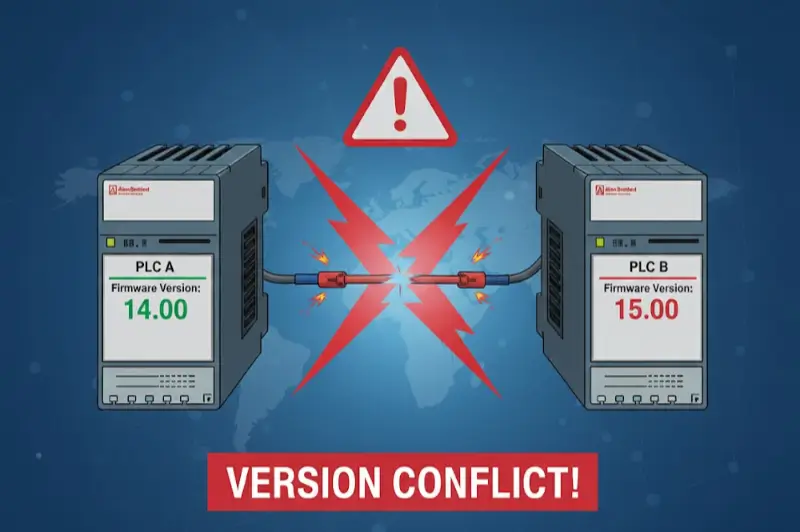
Hardware availability alone does not guarantee recovery. ControlLogix and CompactLogix systems are firmware-sensitive.
Common mistakes include installing newer firmware incompatible with existing I/O, replacing CPUs without matching major firmware revisions, and losing project backups.
Zero-downtime firmware discipline requires maintaining firmware-matched spare CPUs, archiving project files offline and offsite, documenting firmware versions per rack, and never relying on “we’ll update later” during downtime.
Step 5: Replace Instead of Repair to Shorten MTTR
Repair sounds economical until time is calculated. Repair diagnostics can take days, success is not guaranteed, logistics add further delay, and firmware compatibility may be lost.
For this reason, leading plants adopt replace-instead-of-repair policies. Suppliers that support two-year replacement warranties eliminate uncertainty and dramatically shorten mean time to recovery. Recovery becomes predictable rather than hopeful.
Step 6: How Multi-Warehouse Supply Reduces MTTR

Mean Time To Recovery is the most important downtime metric. A multi-warehouse supply model reduces MTTR by increasing availability probability, reducing customs delay risk, and allowing cross-region fallback.
Industrial buyers increasingly prefer suppliers with geographically distributed stock rather than relying on a single warehouse or region.
Supported brands and platforms can be explored here:
https://topautodevice.com/pages/shop-by-brands
Step 7: Build a ControlLogix and CompactLogix Spare Parts Playbook
A zero-downtime strategy must be documented. A spare parts playbook should include a critical module list per line, spare location mapping, supplier contact escalation paths, firmware matrices, replacement procedures, and shipping fallback options.
This documentation transforms downtime response from panic into execution.
Common Mistakes That Destroy Zero-Downtime Plans
Common failures include stocking I/O but not CPUs, ignoring firmware parity, relying on a single supplier, treating spare parts as a procurement issue rather than an operations issue, and delaying end-of-life planning.
Avoiding these mistakes is often more important than buying more stock.
What Zero Downtime Looks Like in Practice
A mature zero-downtime strategy produces predictable recovery times, lower emergency freight costs, less overtime stress, higher production stability, and stronger supplier leverage.
Zero downtime is not perfection. It is preparedness.
Downtime Is Optional in 2026
ControlLogix and CompactLogix systems are powerful only when supported by intelligent spare parts planning.
In 2026, downtime is rarely caused by technology failure alone. It is caused by planning failure.
Factories that invest in system-level spare strategies, multi-layer inventory models, firmware discipline, and fast, reliable suppliers will operate while others wait.
If you are planning your ControlLogix or CompactLogix spare parts strategy, you can review available inventory or request assistance anytime:
https://topautodevice.com
https://topautodevice.com/collections/allen-bradley
https://topautodevice.com/pages/shop-by-brands