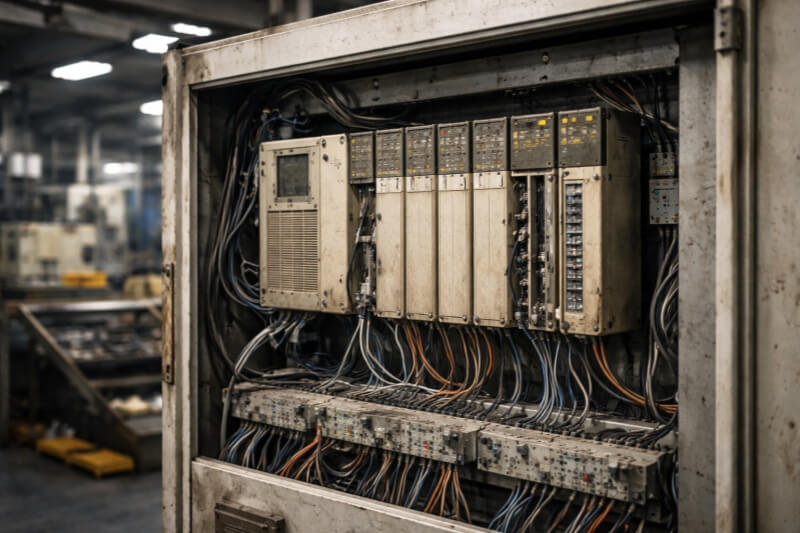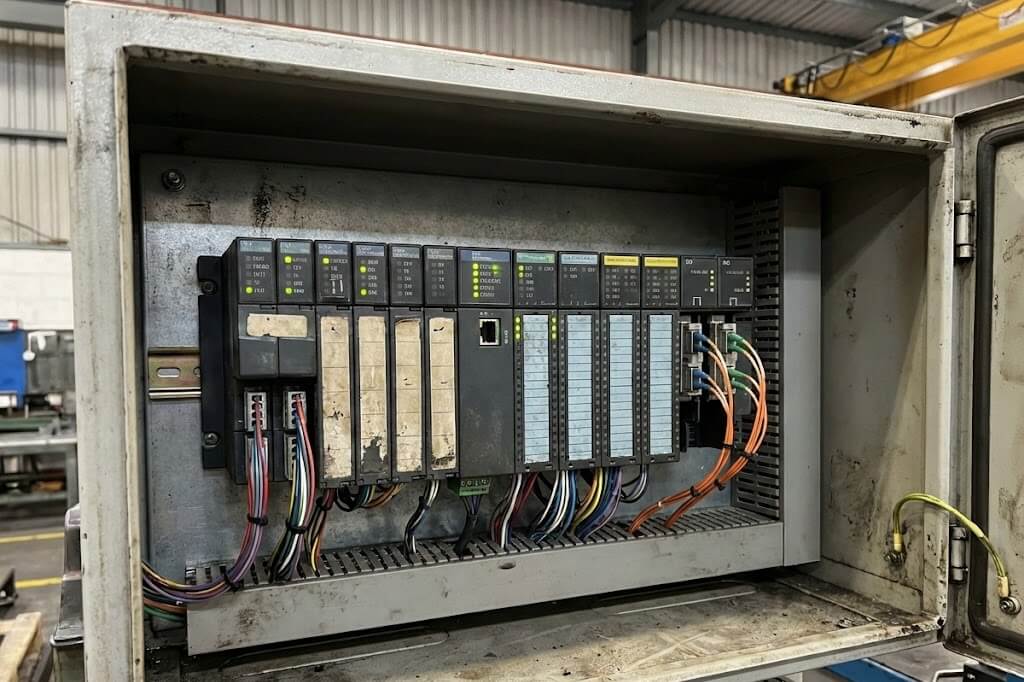
Why PLC Performance Problems Rarely Start with the CPU
When production issues appear on a factory floor, the first assumption is often that the PLC is “too slow.” Engineers look at scan times, processor models, or controller generations, believing that upgrading the CPU will automatically solve performance bottlenecks.
In real industrial environments, this assumption is rarely correct.
Most PLC platforms deployed today already have far more processing power than typical control logic requires. Ladder logic execution, Boolean operations, and standard motion control consume only a fraction of modern controller capabilities. Yet downtime, latency, and instability still occur.
This contradiction exists because PLC performance is not a single-component issue. It is the outcome of how controllers, HMIs, communication networks, power quality, and system architecture interact over time.
Understanding performance requires stepping back and evaluating the entire automation system as a living, evolving structure rather than a static piece of hardware.
CPU vs Processor: Why the Distinction Matters Less Than You Think
In industrial automation discussions, the terms CPU and processor are often used interchangeably. While there are architectural differences at a technical level, these distinctions rarely explain real-world performance failures.
From a practical standpoint, most PLC CPUs are not operating near their computational limits. Instead, they are constrained by how frequently they must communicate, how much data they exchange with HMIs, and how efficiently the program is structured.
Performance issues often emerge from excessive communication polling, poorly organized logic blocks, uncontrolled HMI data requests, network congestion, and inconsistent power conditions.
Upgrading a processor without addressing these factors typically results in minimal improvement, if any.
In many cases, replacing a CPU simply masks deeper design issues until they resurface later in a more disruptive form.
How Communication Load Becomes a Silent Performance Killer
Modern PLC systems are no longer isolated controllers. They are nodes in a dense communication environment that includes HMIs, remote I/O, drives, sensors, safety systems, and supervisory software.
Each communication request consumes processing time. When these requests are poorly managed, they create invisible bottlenecks.
HMIs polling unnecessary tags at high frequency, multiple devices requesting the same data simultaneously, legacy communication protocols layered onto modern networks, and improperly segmented Ethernet architectures are common causes.
What makes communication-related performance issues difficult to diagnose is their intermittent nature. Systems may run smoothly during testing, only to degrade under real production loads.
Designing communication with intention is often more impactful than choosing a faster controller.
For additional reference on communication behavior and industrial automation architecture, international standards published by the IEC provide useful guidance: https://www.iec.ch
The Overlooked Role of HMIs in PLC Performance
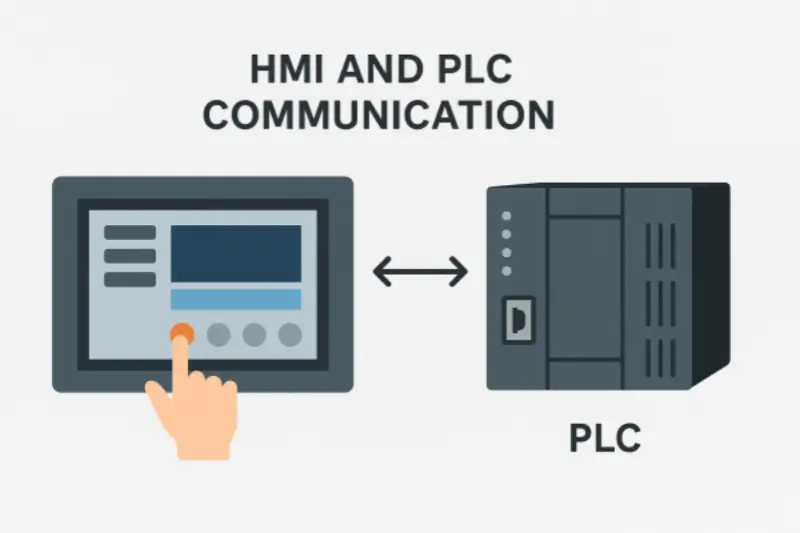
Human-Machine Interfaces are often treated as passive display panels. In reality, they actively shape system behavior.
Every screen refresh, tag read, and alarm update generates communication traffic. When HMIs are poorly configured, they can overload both the PLC and the network without triggering obvious fault indicators.
Over time, physical aging compounds the problem.
Industrial HMIs operate in harsh conditions such as heat, vibration, dust, and humidity. As components degrade, response times slow, communication errors increase, and system stability suffers. These symptoms are frequently misdiagnosed as PLC or network failures.
In many facilities, replacing an aging HMI restores stability without touching the controller.
Regular HMI lifecycle management is a performance strategy, not just a maintenance task.
Why Small PLCs Still Play a Critical Role in Modern Automation
Despite the availability of powerful PAC platforms, compact PLCs remain essential in many industrial environments.
They are widely used for machine-level control, auxiliary processes, standalone equipment, and retrofit or expansion projects.
When applied within their intended scope, small PLCs offer excellent reliability and clarity. Problems arise when they are overloaded with excessive communication, complex logic, or responsibilities better handled by higher-level controllers.
Performance issues in these systems are rarely due to hardware limitations. They stem from architectural misuse.
Choosing the correct controller size is about balance, not capacity.
For engineers sourcing controllers across multiple brands and generations, centralized access to verified inventory helps align system design with real supply availability. A broad overview of supported brands can be found here: https://topautodevice.com/pages/shop-by-brands
System Design: The Real Determinant of Long-Term Performance
PLC performance degrades over time not because processors slow down, but because systems evolve without structural discipline.
Incremental logic additions without refactoring, expanding HMI scope without communication review, mixing old and new hardware without architectural planning, and reactive maintenance all contribute to gradual instability.
A well-designed system anticipates change. It defines communication boundaries, modularizes logic, and documents intent.
When performance is treated as a system-level responsibility rather than a component issue, stability improves naturally.
Why Spare Parts Strategy Is Part of Performance Planning
Performance is meaningless if recovery is slow.
In real production environments, failures are inevitable. What differentiates resilient operations is how quickly systems return to service.
This is where spare parts strategy intersects directly with performance.
When critical PLCs, communication modules, or HMIs fail, delays are often caused by sourcing issues rather than technical complexity. Systems that depend on obsolete or regionally constrained components experience extended downtime.
Maintaining access to factory-sealed, tested automation parts across multiple regions is a performance decision, not just a procurement one.
For widely deployed platforms such as Allen-Bradley controllers, ensuring reliable sourcing paths is essential: https://topautodevice.com/collections/allen-bradley
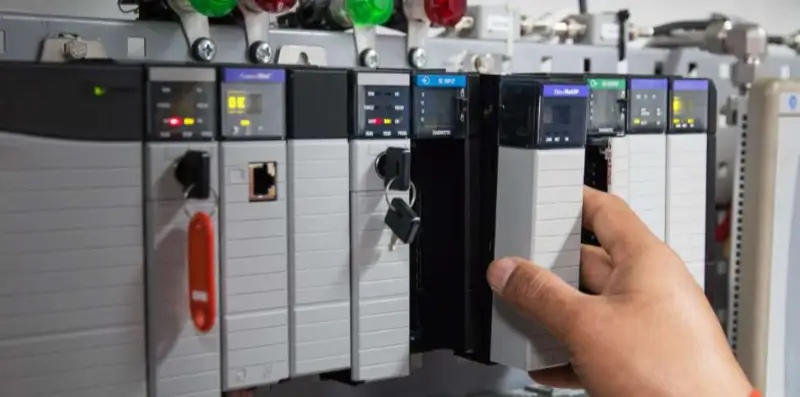
Environmental Factors Engineers Often Underestimate
Even perfectly designed systems suffer when environmental conditions are ignored.
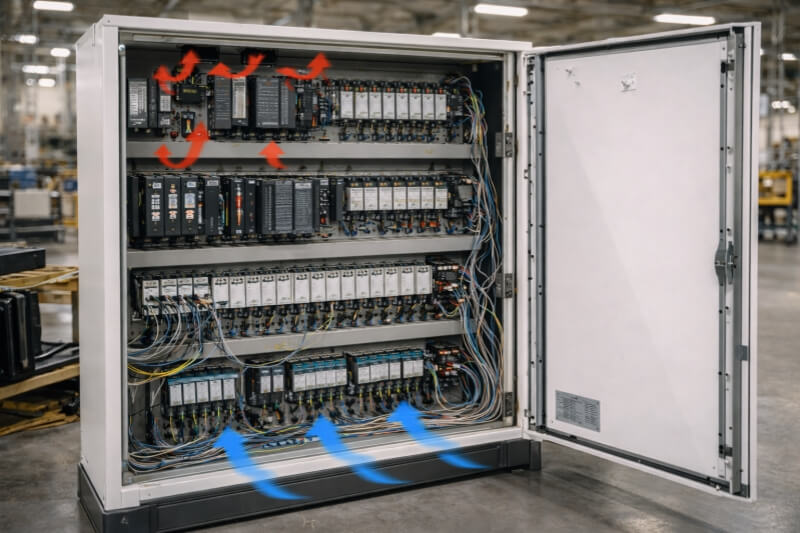
Temperature fluctuations, airborne contaminants, vibration, and unstable power degrade electronics gradually. Performance issues appear long before complete failure occurs.
Common symptoms include increased communication retries, random I/O behavior, reduced HMI responsiveness, and intermittent controller faults.
Addressing environment-related performance degradation often involves control cabinet design, airflow management, and power conditioning—factors external to the PLC but critical to its behavior.
Why Performance Problems Reappear After “Successful” Upgrades
Many facilities experience a frustrating cycle. Performance degrades, hardware is upgraded, stability improves briefly, and problems return.
This pattern occurs when upgrades treat symptoms instead of root causes.
Without revisiting system architecture, communication strategy, and lifecycle management, new hardware simply inherits old design flaws.
True performance improvement requires architectural review, communication optimization, HMI rationalization, spare parts planning, and environmental control.
Hardware upgrades should be the final step, not the first reaction.
Performance as an Operational Philosophy
The most reliable automation systems are not the newest or fastest. They are the most thoughtfully designed and best supported.
Organizations that achieve high uptime treat performance as an ongoing discipline rather than a one-time specification.
They understand that performance is cumulative, small inefficiencies compound over time, and recovery speed matters as much as failure prevention.
This philosophy aligns engineering decisions with operational reality.
Building Performance-Resilient Systems in a Changing Supply Chain
Global supply chains have introduced new constraints into automation design. Lead times, discontinuations, and regional availability now influence architectural choices.
Designing systems that rely on accessible, well-supported components is part of performance engineering.
When systems are designed with sourcing resilience in mind, downtime events become manageable disruptions instead of operational crises.
Maintaining visibility into available inventory across regions helps align design intent with real-world constraints: https://topautodevice.com
Final Thoughts: Performance Is a System, Not a Specification
PLC performance cannot be measured by clock speed alone.
It is shaped by communication discipline, HMI behavior, system architecture, environmental conditions, and supply readiness. Engineers who recognize this build systems that remain stable long after installation.
In industrial automation, performance is not about how fast a controller can think. It is about how intelligently the entire system is designed to operate, adapt, and recover.