In the industrial automation field, CNC (Computer Numerical Control) and PLC (Programmable Logic Controller) software programs fall into the same category of essential technologies that can create efficiency and exactness for machines to perform tasks. Although both have the same goal of improving automation, without question, their intentions, capabilities, and applications differ considerably. This article will discuss the differences between CNC and PLC software programs so you can more easily evaluate your opportunities in your manufacturing processes.
What is CNC Software?
CNC software is used to control and manage CNC machines: lathes, milling machines, 3D printers, etc. CNC machines automate the process of creating precise parts while directing computer-controlled movements that follow the instructions of a computer. The software is the bridge between the computer system and the machine—it translates design files into the commands that direct the machine’s movements.
Typical CNC Software:
Fusion 360: A robust CAD/CAM tool for CNC design and CNC machine control.
Mastercam: Easy to use with toolpath generation capabilities.
SolidCAM: Directly integrated with SolidWorks to produce CAM solutions for CNC programming.
Features of CNC Software:
Accuracy: CNC software drives machines to perform cuts and drill with precision.
G-Code: CNC software uses design files (usually DXF, STEP, or STL) and generates G-code for machines to understand.
Real-time view of CNC program: Many types of CNC programs give operators the ability to monitor the machine in real time to provide quality control.
What is PLC Software?
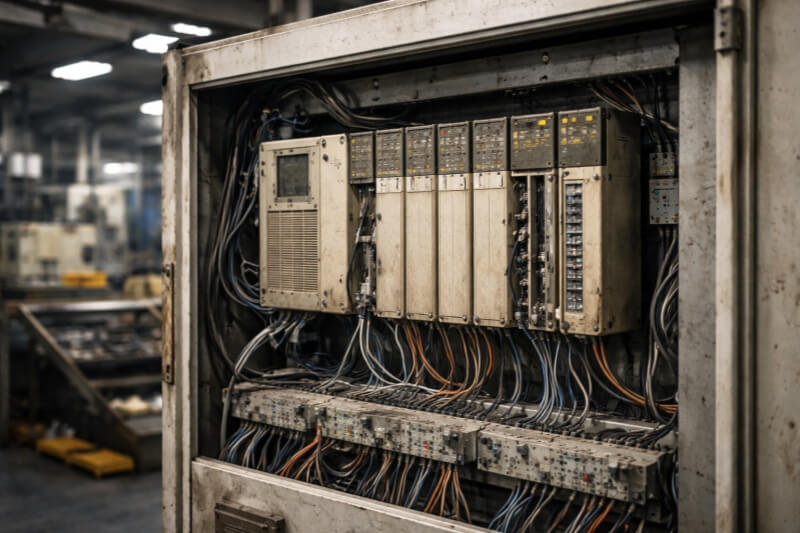
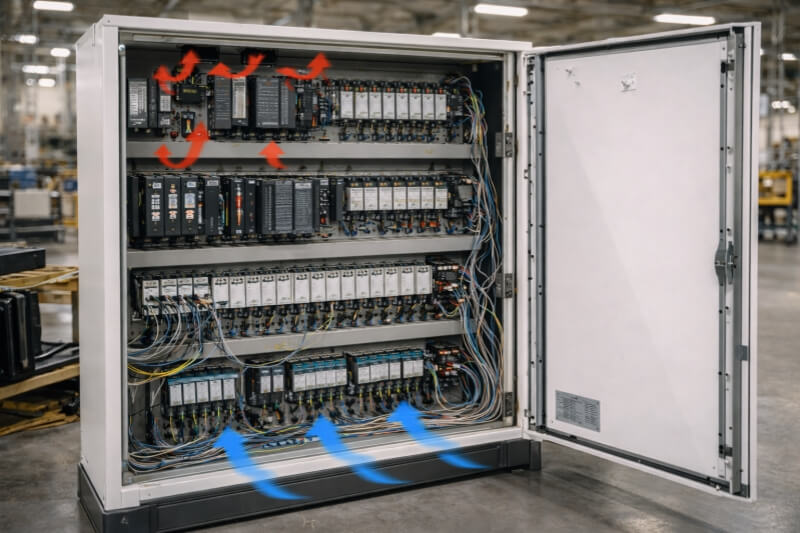
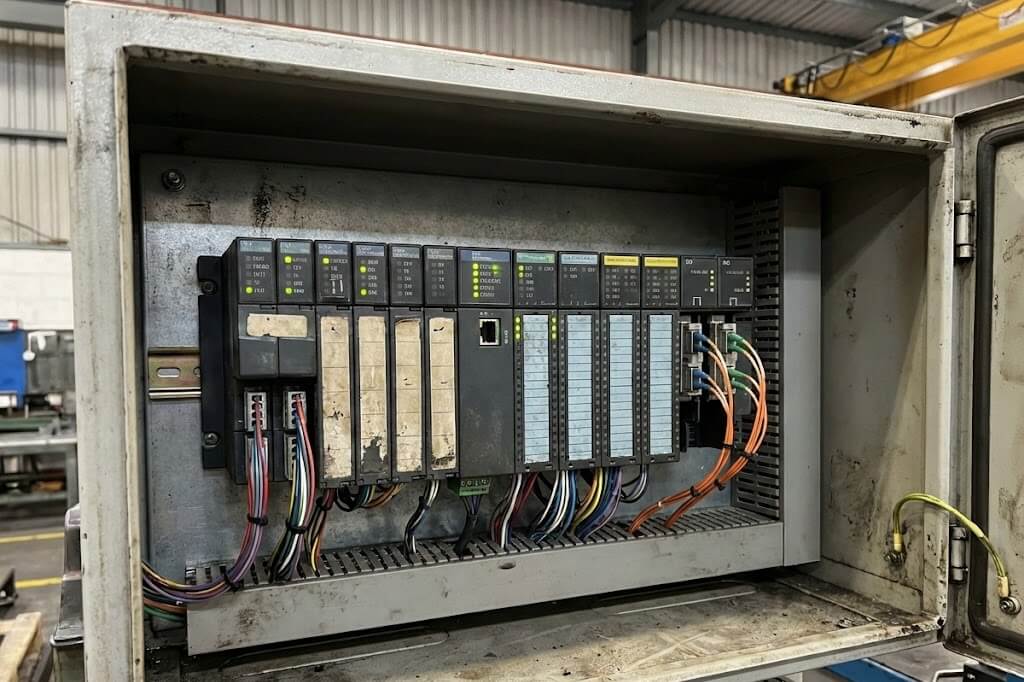
PLC software is designed to program PLC controllers—digital computers used for automation control in manufacturing, assembly lines, and other industrial processes. Machines, lights, sensors, and motors can be managed with PLCs through inputs and outputs based on event-driven logic conditions. PLCs are an essential component of controlling processes in multiple industrial applications, including food processing, automotive, and energy.
Typical PLC Software:
Siemens TIA Portal: An all-in-one automation platform from Siemens and an excellent platform for programming and monitoring PLCs.
Rockwell Studio 5000: A high-performance PLC software feasible for large manufacturing facilities.
Schneider Electric EcoStruxure: Companies can program and monitor PLCs in this integrated environment.
Essential Features of PLC Software:
Programmable Logic: PLC software allows the users to develop control logic triggered by input signals (i.e., some sensor data) and certain conditions (i.e., a condition could also be if the sensor sees motion the machine will activate, depending on the programming).
Real Time Execution: PLCs complete commands in real-time, when physical systems are triggered PLCs execute commands that use the input and condition in real time.
Flexible Inputs/Outputs: PLC Software is able to control many types of hardware ranging from temperature sensors to motor controllers making them able to work with many kinds of devices in an industrial applications.
Key Differences between CNC and PLC Software
1. Purpose and Operation
The biggest difference between CNC and PLC software is purpose and context:
CNC software is mainly used for machining operations like cutting, drilling, and milling. CNC Software focuses on moving a machine with precision based on a specific 3D design file that is processed.
PLC Software is meant for general automation, PLC would be a system that is used to automate multiple devices on a floor, robotic arms, temperature, etc, the PLC manages in an overarching manner the activity of industrial processes as a whole.
2. Control Mechanism
CNC software is focused on geometry and toolpaths, since it translates data directly into commands given to a machine (e.g. G-code). A CNC machine uses commands in the code provided to perform work on a cutting tool or medical physiological machine.
A PLC software is supported by functional logic operations (e.g. “if-then” conditions), so it requires inputs to trigger an action, and controls many different devices at once if desired.
3. Integration with Machines
CNC software is integrated into the CNC machine itself. Methods of operation and movements prescribed by the software dictate how to execute the production of the parts based on the particular program loaded into the machine and then using the appropriate tooling.
PLC software interfaces with multiple pieces of machinery and devices, not just one. PLC software is capable of taking control of many machines, many sensors, or even many actuators in an assembly line to control their handler collectively and logically based on the programming logic.
Advantages of CNC Software
High Precision: CNC software utilizes a CNC machine with little to no human touch in order to reduce error rate and increase accuracy with its Geometric direction cuts and shapes.
Flexibility: CNC software has flexibility and can rapid changes, making it very beneficial with rapid prototyping or short run production when required.
Automation: CNC software helps manufacturers automate a great deal of the labor intensity work, reduce human error, and be more efficient.
Advantages of PLC Software
Real-time control: PLCs are designed with this factor in mind; they are perfect for processes that are time-sensitive. Real-time monitoring and control is key to allowing consistent production flow and eliminating expensive slow-downs.
Scalability: PLC software is scalable; from small systems to large, complex, industrial automation. In some cases, multiple PLCs can function simultaneously, controlling larger processes.
Reliability: PLC systems are designed for use in harsh industrial environments and are purpose-built to withstand tough conditions such as vibration, extreme temperature, and electromagnetic interference.
How To Choose Between CNC and PLC Software
When determining whether CNC or PLC software is best for your operation, it's important to evaluate what your goals are.
If you are looking to produce parts that require precision and tolerances, CNC software will be the best option.
If you want to control real-time industrial processes involving multiple devices that are complex in nature, PLC software will provide the versatility and robustness you need.
These days, in many industrial applications, both CNC and PLC software can coexist. CNC machines, for example, require PLCs to operate auxiliary processes that may include coolant, lights, or movement of robotic arms. Using both together can maximize production and create synergistic workflows.
Conclusion
Though CNC software and PLC software each serve their own purpose within the industrial automation ecosystem, both are essential for modern manufacturing. It is important to understand the distinctions between the two types of software so that you can select the better solution for your automation purpose.
As a manufacturer, remaining up to date on CNC and PLC development ensures your operations can be efficient, accurate, and economical.